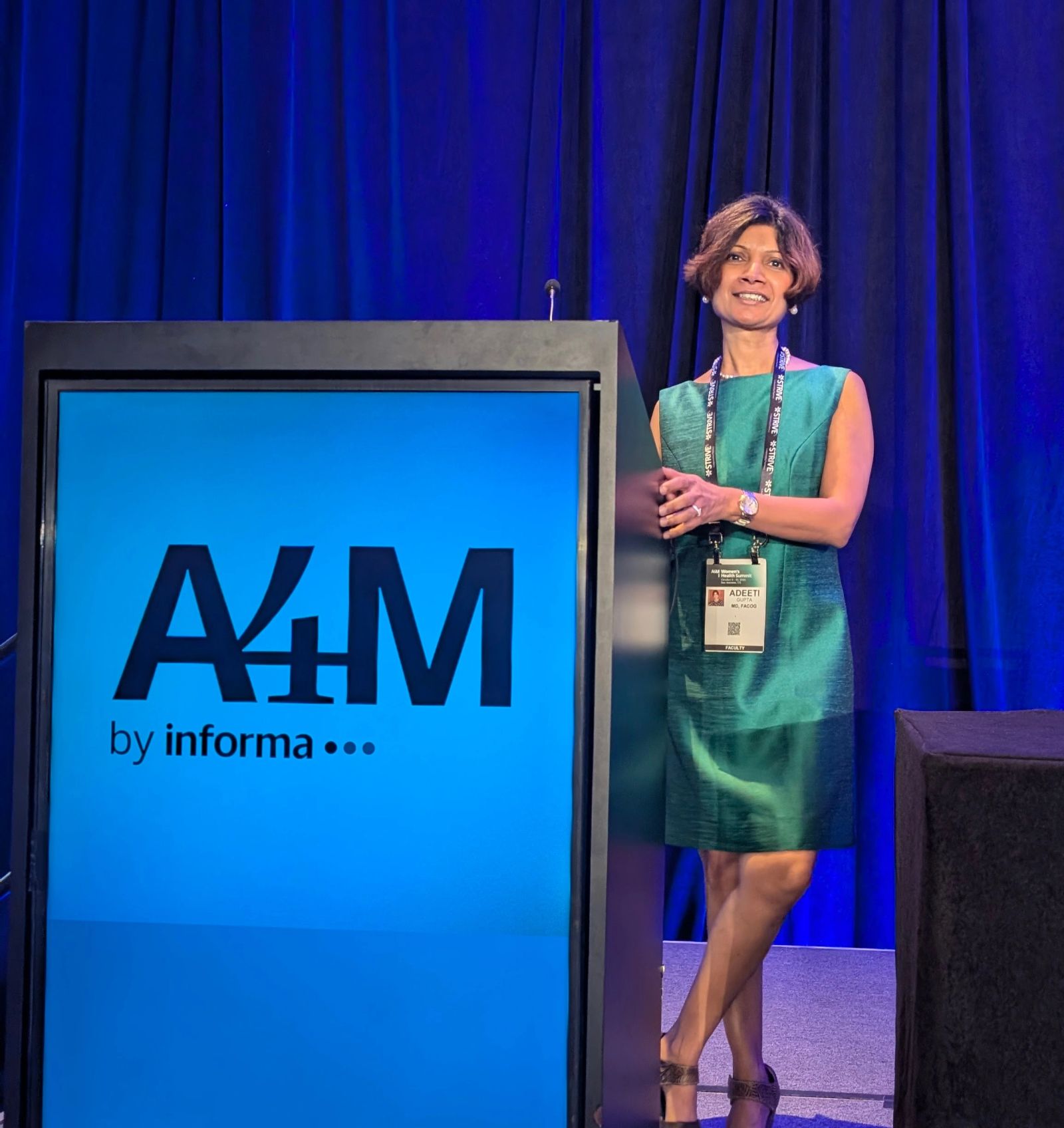
Women's health needs root-cause care, not quick prescriptions. That was Dr. Adeeti Gupta's message at the American Academy of Anti-Aging Medicine (A4M) Women's Health Summit in San Antonio, Texas from October 8th-10th. Dr. Gupta, a double board-certified OB/GYN and founder of NY360 Wellness, has prescribed hormone therapy for more than 15 years.
5 takeaways at a glance:
- Find the cause of sexual dysfunction before prescribing sprays or peptides.
- The bio-psycho-social model treats the whole woman.
- The HRT revolution risks over-prescribing without monitoring.
- Lifestyle, routine and mental health remain the foundation.
- Women's health research needs more funding.
1. Sexual health: looking beneath the covers
Low desire, painful sex and arousal problems are symptoms, not diagnoses. In her talk on sexual health, pain and desire pathways, Dr. Gupta urged clinicians to find the "what" and the "why" before prescribing a testosterone cream, spray or peptide.
The workup she recommends looks at:
- Hormones: estrogen, testosterone and thyroid
- Pain: pelvic floor tension, vulvar changes, endometriosis (more on vulvodynia and pelvic pain)
- Inflammation and gut health: which drive estrogen metabolism (signs of deep-rooted inflammation)
- Medications, stress and relationships: which can quietly shut down desire
Desire, arousal and pain share connected pathways. Treating one without the others rarely lasts.
2. The bio-psycho-social model: treating the whole woman
A woman's health is shaped by her biology, her mind and her life at the same time. The bio-psycho-social model looks at all three together:
- Biological: hormones, inflammation, gut health, medications
- Psychological: mood, stress, body image, past trauma
- Social: relationships, work, caregiving, access to care
Symptoms like fatigue, weight gain or low libido rarely have one cause. Lab values alone can miss the stress behind them, and talk alone can miss a treatable hormone deficiency. At NY360 Wellness, every plan pairs advanced testing with conversations about sleep, stress and goals.
3. The HRT revolution may be swinging too far
Hormone replacement therapy is back, and that helps many women (what the FDA's removal of the HRT black box warning means for you). But the pendulum may now swing toward over-prescribing. Online platforms and practitioners with little hormone training can prescribe after a short questionnaire, often with no exam, no baseline labs and no follow-up.
Dr. Gupta's concern is not HRT itself but HRT without supervision. Unmonitored therapy can mean the wrong dose, missed warning signs such as abnormal bleeding, and a lab number treated while the real driver goes unaddressed.
Safe HRT includes a full history and exam, baseline labs, the lowest effective dose and regular monitoring, in line with The Menopause Society's hormone therapy position statement. Ask any prescriber who will follow your therapy, and how often. Learn how Dr. Gupta approaches bioidentical hormone replacement therapy.
4. Lifestyle, routine and mental health still matter most
No hormone or peptide can out-work a body that is under-slept, over-stressed and inflamed. The basics remain the foundation:
- Sleep: poor sleep raises cortisol and worsens hot flashes and mood (tools for sleep and stress).
- Nutrition and gut health: the gut helps clear and recycle estrogen (functional medicine for gut health).
- Strength training: protects bone and muscle after menopause.
- Mental health: depression and anxiety affect desire, energy and pain, and deserve treatment in their own right.
Hormone therapy works best as part of a plan, not in place of one.
5. Women's health research needs more funding
Women are half the population, yet much of medicine is built on data from men. Dr. Gupta called for more funding to study women on their own terms, because women's physiology, chemistry and biology differ from men's. The NIH only began requiring researchers to account for sex as a biological variable in 2016.
- Lab values: many "normal" ranges don't account for sex, cycle or menopause stage.
- Drug response: women absorb and clear many medications differently. In 2013 the FDA cut the recommended dose of the sleep drug zolpidem in half for women because they clear it more slowly.
- Life stages: pregnancy, perimenopause and menopause each change how the body works.
Until the research catches up, women need clinicians who read results in context.
Frequently asked questions
What causes low sex drive in women? Hormone changes, pelvic pain, medications, inflammation, stress, mental health and relationship factors, often several at once. A full evaluation finds the cause before treatment.
Is it safe to get HRT from an online platform? HRT is safest with an exam, baseline labs and regular monitoring by a clinician trained in hormone therapy.
What is the bio-psycho-social model? An approach that looks at biological, psychological and social factors together to explain symptoms lab tests alone cannot.
Why do women need different lab ranges and drug doses? Women's hormones and metabolism differ from men's and change across life stages, but many ranges and doses were developed mostly in men.
Work with Dr. Gupta
Dr. Adeeti Gupta, MD, FACOG, is a double board-certified OB/GYN trained in functional medicine and medical sex therapy. If you're dealing with low desire, painful sex or menopause symptoms, or want a second opinion on your hormone therapy, book a consultation at NY360 Wellness.