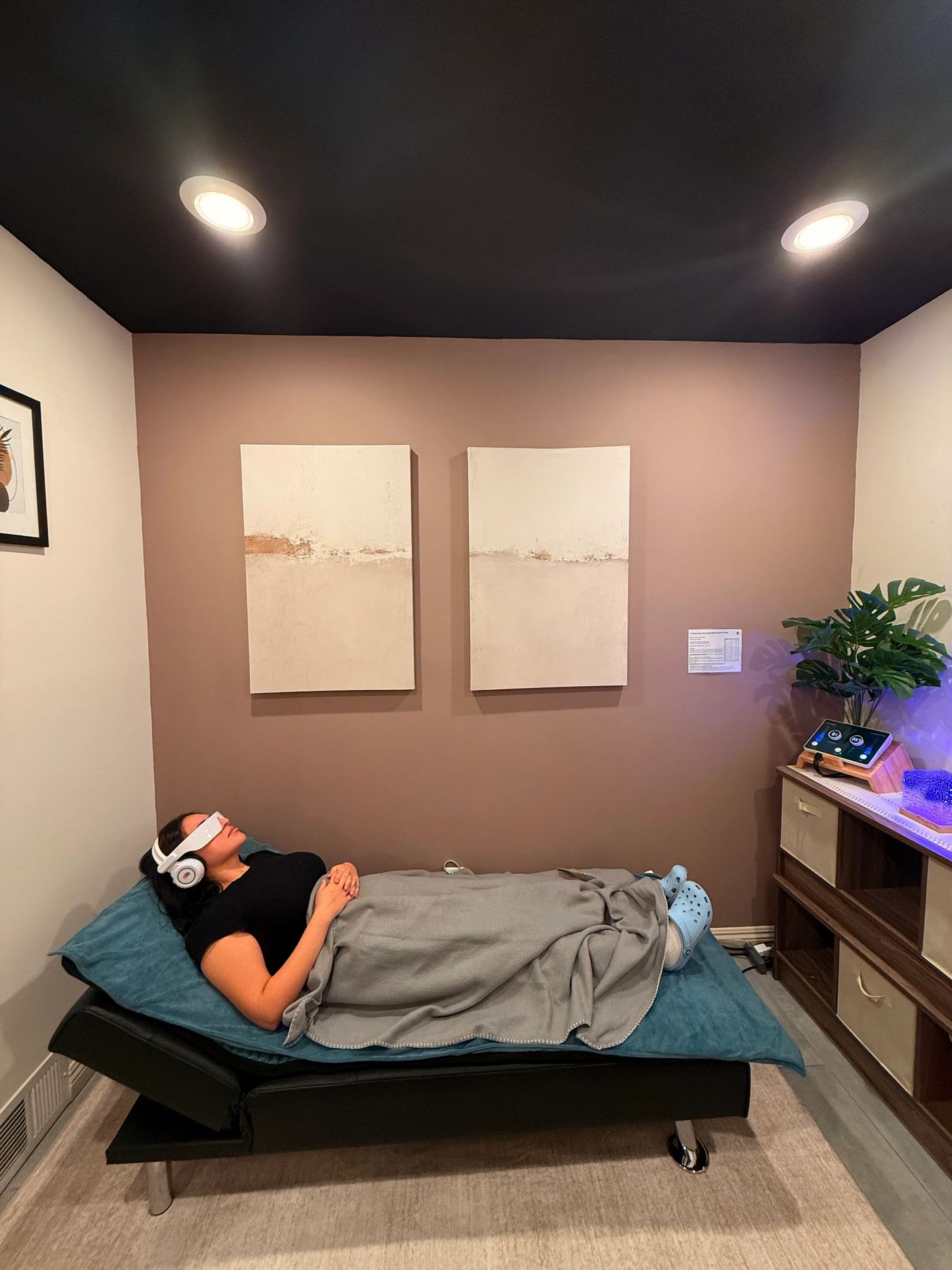

Neural Therapy: A Root-Cause Approach to Chronic Pain, Autonomic Dysfunction, PTSD, Trauma and Complex Conditions
Neural therapy is an advanced regulatory treatment that uses targeted injections of local anesthetics (such as procaine or lidocaine) to reset dysfunctional autonomic pathways, interrupt chronic pain circuits, and restore physiologic balance.
Unlike conventional treatments that suppress symptoms, neural therapy works at the level of:
- Autonomic nervous system (ANS) regulation
- Neuroinflammation reduction
- Microcirculation improvement
- Fascial Continuity System regulation by resetting the membrane potentials
- Interference field resolution
This systems-based mechanism explains why neural therapy shows benefit across multiple seemingly unrelated conditions.
History
In 1925, the brothers Dr. Ferdinand and Walter Huneke, both sons and grandsons of physicians, without any prior knowledge of the work of Spiess, Schleich or Leriche, discovered the healing aspects of Procaine. This occurred by accident when, in 1925, Ferdinand Huneke gave his nurse, who he had been treating for rheumatism, an infusion of procaine and her previously therapy-resistant migraines disappeared. This “lightening reaction” impressed Dr. Huneke and he realized he may have found a new therapy for pain. He named this new therapy “Healing Anesthetics.”
Neural Therapy involves the injection of local anesthetics into scars, peripheral nerves, autonomic ganglia (deep grouping of nerves), glands, acupuncture points, trigger points, and other tissues. Ferdinand Huneke, along with his brother, Walter, first reported the results of their research into the healing properties of local anesthetics with the publication of “Unknown Distant Effects of the Local Anesthesia” in 1928.
The Hunekes reported that reaction to the injections could help organs at a distant site and described this phenomenon as a reflex.
It is a safe medicine and has been used at renowned anti-aging clinics, such as Dr. Ana Aslan’s in Romania, where she treated Bob Hope, Cary Grant, Marilyn Monroe, Winston Churchill, and others.
Mechanism of Action (Why Neural Therapy Works)
Across all studies, a consistent mechanism emerges:
- Interrupts pathological reflex arcs and “pain memory”
- Modulates sympathetic overactivity
- Reduces inflammatory cytokines (TNF-α, IL-1, IL-6)
- Improves tissue perfusion and oxygenation
- Restores balance between sympathetic and parasympathetic systems
This “reset effect” allows the nervous system to reorganize and break chronic disease cycles.
Clinical Benefits of Neural Therapy by Condition
1. Fibromyalgia & Chronic Pain Syndromes
Pathophysiology
Fibromyalgia involves:
- Central sensitization
- Neuroendocrine dysfunction
- Autonomic imbalance
- Chronic inflammation
Benefits of Neural Therapy
- Significant reduction in pain scores (VAS, FIQ)
- Improved quality of life and functional capacity
- Better sleep and hormonal regulation
- Reduced inflammation markers
Clinical findings show:
- Sustained symptom improvement lasting ~17 months on average
- Superior outcomes compared to exercise therapy alone
Mechanistic Insight
Neural therapy targets both:
- Peripheral pain generators (trigger points)
- Central sensitization pathways
It also improves lymphatic flow and autonomic regulation, addressing root causes rather than symptoms.
2. Migraine & Chronic Headaches
Pathophysiology
Migraine is strongly linked to:
- Autonomic imbalance
- Neurogenic inflammation
- Hormonal and gut dysfunction
- Cervical and cranial interference fields
Clinical Outcomes
- >91% improvement rate
- ~60% complete remission in studied patients
Benefits
- Reduced frequency and intensity of attacks
- Long-term stabilization of chronic migraine
- Improved response even in multifactorial cases
Mechanism
- Modulates autonomic reflex circuits
- Reduces parasympathetic and sympathetic dysregulation
- Interrupts chronic pain loops
Neural therapy is particularly effective when targeting:
- Sphenopalatine ganglion
- Cervical spine dysfunction
- Hormonal and gut-related triggers
3. Vulvodynia & Chronic Vulvar Pain
Pathophysiology
- Peripheral nerve hypersensitization
- Neurogenic inflammation
- Chronic pelvic nerve dysfunction
Evidence-Based Outcomes
- Up to 80% long-term symptom resolution
- Sustained benefit lasting up to 13 years
Benefits
- Long-term pain elimination
- Reduction in nerve hypersensitivity
- Restoration of pelvic nerve function
Clinical Insight
The data strongly supports vulvodynia as a neuro-functional disorder, not purely gynecologic—making neural therapy a key treatment modality.
4. Chronic Pelvic Pain Syndrome (CPPS)
Pathophysiology
- Multifactorial (gynecologic, musculoskeletal, neurologic)
- Strong involvement of pelvic autonomic plexuses
Role of Neural Therapy
- Targets uterovaginal and pelvic nerve plexuses
- Reduces myofascial trigger points
- Improves autonomic regulation
Clinical Relevance
High diagnostic correlation with cervical tenderness (parametropathy) suggests a strong neurogenic component to pelvic pain
5. Musculoskeletal Pain & Thoracic Dysfunction
Pathophysiology
Thoracic blockages lead to:
- Sympathetic overactivation
- Impaired microcirculation
- Myofascial trigger points
- Organ dysfunction via reflex pathways
Benefits of Neural Therapy
- Reduces sympathetic hyperactivity
- Improves blood flow and oxygenation
- Relieves chronic musculoskeletal pain
- Restores mobility and autonomic balance
Clinical Impact
These dysfunctions can drive:
- Hormonal imbalance
- metabolic disease
- chronic pain syndromes
Neural therapy effectively breaks this cycle by:
- Resolving segmental dysfunction
- Normalizing autonomic signaling
6. Diaphragm Dysfunction & Systemic Disorders
Pathophysiology
- Phrenic nerve dysfunction
- Myofascial restriction
- Chronic stress and autonomic imbalance
Symptoms include:
- Fatigue
- sleep disorders
- reflux
- cardiopulmonary issues
Benefits of Neural Therapy
- Improves diaphragmatic mobility
- Enhances respiratory efficiency
- Restores autonomic regulation
- Reduces systemic symptoms
7. Neuropathic Pain & Cervical Dysfunction
Neural therapy is effective in:
- Cervical neuropathy
- Trigeminal neuralgia
- Peripheral nerve pain
Mechanism
- Blocks abnormal nerve signaling
- Restores normal excitability thresholds
- Reduces neuroinflammation
Clinical evidence shows recovery even in severe neuralgia cases after targeted injections.
8. Neural Therapy & Stellate Ganglion Block (SGB) in PTSD
Emerging research highlights a powerful extension of neural therapy—stellate ganglion block (SGB)—as a promising treatment for post-traumatic stress disorder (PTSD), particularly in patients with persistent or treatment-resistant symptoms.
PTSD is increasingly understood as a condition driven by autonomic nervous system dysregulation, where the body remains stuck in a chronic “fight or flight” state. The stellate ganglion, part of the cervical sympathetic chain, plays a key role in this response. By delivering a targeted local anesthetic to this region, SGB works to reduce sympathetic overactivity and reset the body’s stress response at its neurologic source .
Clinical evidence shows that sympathetic nerve blocks can:
- Reduce hyperarousal, irritability, and anxiety
- Improve sleep and emotional regulation
- Enhance concentration and overall function
- Provide meaningful relief even in patients who have not responded to traditional therapies
A recent meta-analysis further supports these findings, demonstrating statistically significant reductions in PTSD symptom severity scores (CAPS) following stellate ganglion block treatment . Improvements have also been observed in related symptoms such as depression and overall psychological distress.
Mechanistically, SGB is thought to:
- Modulate sympathetic nervous system activity
- Influence stress hormone regulation via the HPA axis
- Reduce neuroinflammation and abnormal signaling pathways
While more large-scale trials are ongoing, current evidence suggests that stellate ganglion block represents a novel, neurobiologically targeted intervention—aligning closely with the principles of neural therapy and root-cause medicine.
Key Advantages of Neural Therapy
Across all conditions, neural therapy consistently demonstrates:
1. Root-Cause Treatment
Targets autonomic dysfunction and interference fields rather than symptoms.
2. Multisystem Impact
Improves:
- Pain
- Hormones
- immune function
- circulation
3. Long-Lasting Results
Effects persist well beyond pharmacologic duration due to nervous system reset.
4. Safety & Cost-Effectiveness
- Low-risk intervention
- Reduces need for long-term medications
- Decreases healthcare utilization
In conclusion
Neural therapy represents a paradigm shift in medicine—from symptom suppression to functional restoration of the autonomic nervous system.
It is particularly powerful in:
- Chronic pain syndromes
- Hormonal Imbalances
- Chronic Inflammation
- Ageing and Wellness
- Neurological disorders
- Complex, multi-system disease
By restoring regulatory balance, neural therapy offers a precision, root-cause approach aligned with Medicine 3.0 and functional medicine principles.
Book your initial consult here or reach us via:
Tel: +1 516-363-3622
Email: connect@ny360wellness.com
In true wellness,
Dr. Adeeti Gupta
Bibliography
- Nazlikul H, Ural Nazlikul FG. Fibromyalgia Syndrome (FMS): Neural Therapy as a Key to Pain Reduction and Quality of Life. Int Clin Med Case Rep J. 2025.
- Nazlikul H, et al. Neural Therapy in Migraine: Clinical Evidence for a Holistic Therapeutic Approach – Analysis of 464 Cases. Int Clin Med Case Rep J. 2025.
- Gerhardt A, et al. Vulvodynia and Chronic Vulvar Pain: Long-Term Success After Therapeutic Local Anesthesia. Pain Ther. 2025.
- Weinschenk S, et al. Cervical Tenderness (Parametropathy) as a Diagnostic Tool for Chronic Pelvic Pain Syndrome. Pain Ther. 2025.
- Nazlikul H, et al. The Significance of Thoracic Blockages for the Autonomic Nervous System – Neural Therapy and Its Clinical Relevance. Recent Adv Clin Trials. 2025.
- Nazlikul H, et al. Diaphragm Dysfunction and Neural Therapy. Manuelle Medizin. 2026.
- Pain and Neural Therapy Compilation (Lidocaine, Procaine, and Fibromyalgia Studies).
- Additional Neural Therapy Mechanism and Autonomic Regulation Studies.
- Journal of Prolotherapy. 2010;2(2):377-386.
- https://www.antiaging-systems.com/articles/professor-ana-aslan-and-gerovital-h3-the-original-and-first-anti-aging-medicine/
- Atlas of Neural Therapy by Dosch.
- Manual of Neural Therapy According to Huneke, by Mathias Dosch and Peter Dosch
- https://clinicaltrials.gov/study/NCT05107752
- https://www.frontiersin.org/journals/psychiatry/articles/10.3389/fpsyt.2023.1309986/full
- https://townsendletter.com/update-of-neural-therapy-an-overlooked-game-changer-for-patients-suffering-chronic-pain/
- https://www.sciencedirect.com/science/article/abs/pii/S1047965118301815